Saturday, December 19, 2020

Science is a process, NOT a god

When I was a kid, I loved Ms. Frizzle, oh heck, I still love her… I mean, I practically became her…red hair, crazy science earrings, constant quest to prove that science is fun in the face of all adversity.  


Though, there is one notable difference between me and Ms. Frizzle…she is magic…my science and I sadly, are not. 


However, in this most joyful year of 2020, I think my fellow people of earth have forgotten this small fact.  Constantly, on the news, social media, or in casual conversation the word “science” is proclaimed as if it were an omniscient being, that will give us all of the answers should we only kneel before it and beg.  If this is you, then you my dear, need Jesus, not science.  Being intimately acquainted with both, I feel entirely confident in my ability to recommend one over the other.


Science does not hold the answer and deliver it at the moment we ask, it does not solve our deepest problems with magic, or tell us only what we want to hear.  Science is a process by which we discover the truth about the world around us.  Did you hear that…I’ll say it again just in case…science is a process.  Like all good processes, there is a method...The Scientific Method.   I went through this last winter with my 7 and 5 year old nephews, so I am confident you can handle it.


The Scientific Method consists of:


-        Asking a question – Important here, the question must be as simple as possible, provable by some sort of experiment where you can control the environment, reproduce your evidence, and over time hopefully find the answer to your question.


-        Forming a hypothesis – An educated guess about what you think the answer to your question will be and no, contrary to what you may have learned in 2020, this will often not match your conclusion (more on this important detail below).


-        Designing an experiment – At this stage you design a way to test your hypothesis, making sure the steps are as simple as possible, controlling for as much variability as you can, and that you can repeat them.


-        Performing the experiment – Ideally, you run your experiment many, many times.  Keeping excellent notes, running statistical analysis, modifying your experiment as necessary and ALWAYS making sure that your data is reproducible.


-        Drawing a conclusion – Again, this may or MAY NOT match your hypothesis.  You must always allow the data uncovered to lead you to the truth, whether or not you like, or wish to believe this truth.


This process takes time, lots and lots of time, the bigger the question and the less that is known on the subject, the more time it takes.  However, we already know a fair amount about a lot of things, so we can also draw on historical knowledge to help us form our hypotheses and draw conclusions from our data.  But remember, EVEN THE HYPOTHESES OF SCIENTISTS ARE NOT ALWAYS CORRECT.  We MUST always go through the process in an objective way.


I have remained, relatively quiet on the topic of the pandemic lately,, not because I don’t have opinions…I most definitely do.  I have stayed quiet because frankly, the whisper of common sense I could offer, felt like a mouse going over Niagara Falls on a leaf…no way is he making it out alive.  So, I have watched, and read, and contemplated, and cried, and become completely enraged at the total bastardization of my one true love…science.  So, let me clear some things up for those of you new to this relationship.


Science Does NOT:

-        Care about your opinion – Whether you believe COVID-19 to be a group hallucination or the absolute WORST disease in the history of the planet.  Science does not care.  The process will give you data and that data (if reviewed objectively) will give you the truth, whether or not that truth hurts your preconceived notions of reality.


-        Fear argument or questions – Science is objective, it does not have a dog in the fight.  It wants only information and truth.  You think the outcome of a particular experiment is wrong GREAT!  Design a new one, ask the question in a different way, gather more data, find more truth.


-        Settle – There is not phrase that makes my blood boil faster than, ”The science is settled.”  Science does not settle, it will always seek more information, data, questioning.  This is not to say that there are not facts and truths we have already discovered, but science isn’t afraid of your skepticism.  You think there is something new to discover about gravity…fantastic Isaac Newton, have at it…see process detailed above.


-        Have emotion – Science is cold and unfeeling.  It does not base it’s conclusion on what makes the population feel safer, or what we really need to hear.  If you want something to make you feel secure in a messed up world I suggest the Bible, a cup of hot tea, and a weighted blanket.


-        Change its mind on a whim – As I noted before the process of science takes time, in this time it will produce data, data can be complied for analysis, and that analysis can lead us to a conclusion.  This conclusion will not then change because it is unpopular.  Science is not Glinda…it’s definitely Elphaba and couldn’t care less about the wizard.  Analysis can be open to interpretation, so you may have two people who can look at the same data and draw different conclusions.  Conclusion drawing is sometimes the artsy part of science, so beware the over confident conclusion and if the data doesn’t give you a clear conclusion…yep you guessed it, more questions and back to the process.


-        Have a political party – The last point I will make here is really the most crucial for 2020.  There is not a “political party of science.”  Science doesn’t give a crap who you want to be the president, or what you feel is the best structure for government.  It will continue to chug through its process of questions being asked, data being gathered, and conclusions being drawn as if you and your opinion are meaningless…I know….rude.


In conclusion, science is a process by which we can find truths, it is not a god.  It is a tool in our tool box we can use to understand and explore the world.  Please, stop worshiping at the altar of science, she can’t handle the pressure to know everything right now….it’s not her process…

Wednesday, March 11, 2020

Coronavirus by the Numbers: Trying to Discover the Real Amid the Ridiculous


Ok, everyone take a deep breath, through your mask and in your 6 foot bubble away from every other living soul, while admiring the new collection of hand sanitizer and toilet paper piled to your basement ceiling.  Are we feeling good about ourselves America…I certainly hope not!  Personally, I am feeling sick…and not the fever, cough, and shortness of breath kind.

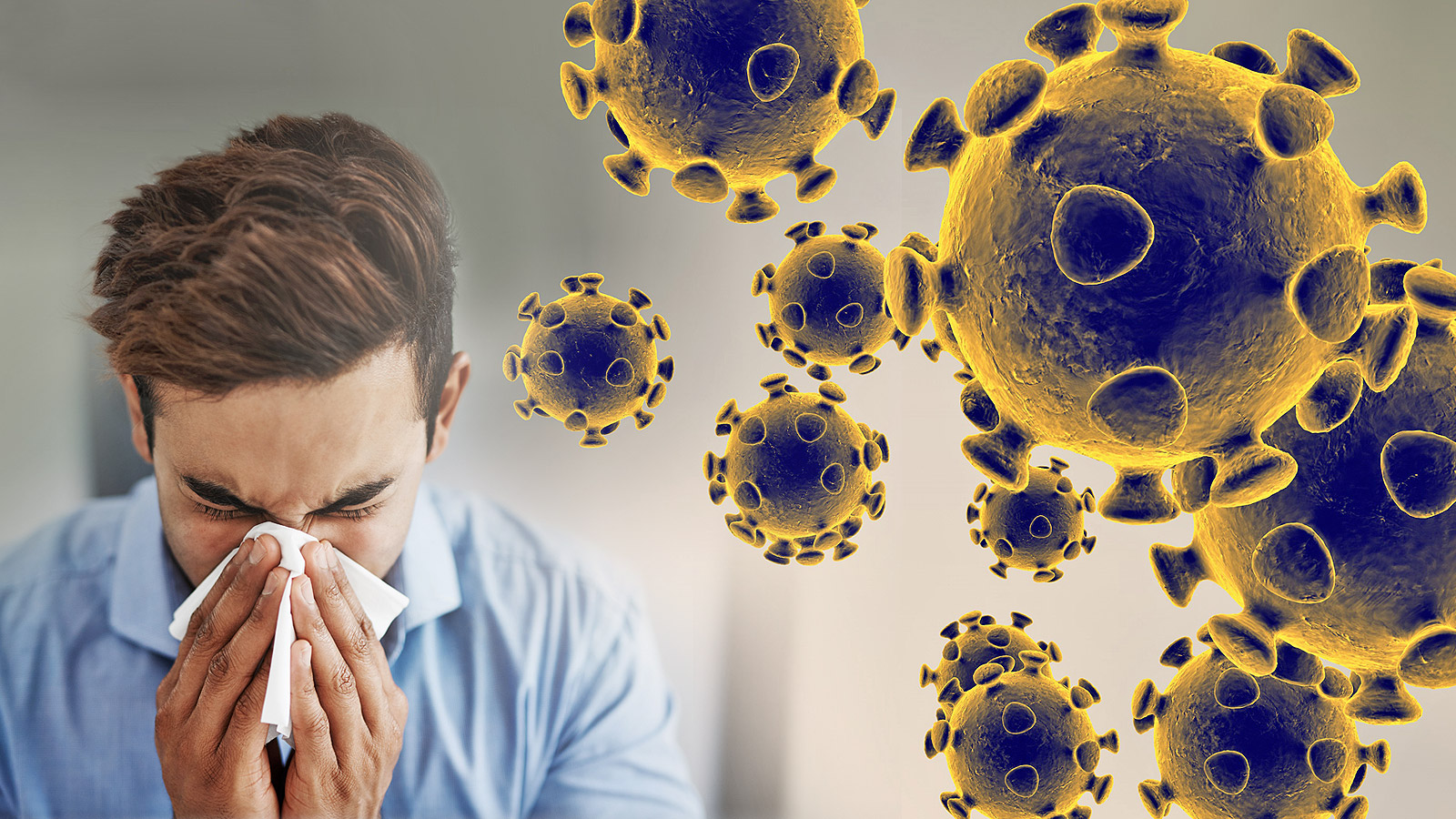
Image result for coronavirus

Coronavirus has swept the world and there are some radical and seemingly ridiculous consequences.  Being a person a reason and sense I have been struggling during the last week or so to grip what is happening and during the last 24 hours to not feel like I am living in the Twilight Zone.  With States of Emergency being called for 2 presumed cases, Universities creating web-based lectures on the fly, sporting events taking place with no fans, NBA suspending play, concerts being cancelled, companies mandating employees work from home, and on and on my head is spinning and I am struggling to understand why these radical decisions are being made. 

I have decided there is one way to get my head on straight and feet on solid ground and it is by going back to what I know: science, numbers, and logic.  Let’s see if we can make sense of some of this together.

What do we know?

Johns Hopkins has put together and interactive map of the cases of Coronavirus (COVID-19).  I will use numbers from this site as of 11Mar2020 10pm EST.  This is a live, updating map so the numbers will change and current numbers can be found here.

We know that COVID-19 can be mild or severe, the severe cases are more common in the elderly or those with existing lung issues.  It can resolve at home over a few days or require hospitalization with oxygen supplementation or in rare cases cause respiratory failure.

The transmission of COVID-19, while not yet entirely known, is thought to be highest when the person is most symptomatic.  This is different from the flu in a very positive way.  The flu is most symptomatic 24-48 hours before a person develops symptoms, so COVID-19 being most contagious during the symptomatic period of the disease makes it much easier to avoid.  It is also suspected that transmission is through body fluid contact i.e. someone with the disease sneezing on or in close proximity to you, sneezing or coughing into their hand and touching an object (staircase handrail for instance) then you touching that object and then touching your mouth, nose, eyes, etc.  It is not thought to be airborne, which is also very positive.

How many people are affected?

Again, using the Johns Hopkins Live Interactive Map on 11Mar2020 10pm 125,865 cases have been confirmed in the world.  If we estimate the world’s population at 7.7 billion people (or so Google tells me) this is 0.0016% of the world’s population.  I think we can all agree that the percent is very small at this point.  Let’s explore the numbers a little bit more and see if they can bring us some peace of mind:

Mortality Rate: With any epidemic/pandemic it is crucial to determine the mortality rate or the likelihood that those who catch the disease will die from the disease.  This number is in constant fluctuation right now for COVID-19 because the number of cases are going up each day, people are recovering, and in cases of severe disease people are dying.  Let’s look at some of the numbers though and see what they can tell us:

Overall mortality (again from the Johns Hopkins’ numbers):

There are 2 ways that I see to look at a global level, so let’s looks at each:

1)      Total deaths/Total Confirmed x 100 = 4,615/125,865 x 100  = 3.6%

This gives us an idea of the virus as a whole, every case that has been confirmed verses the number of deaths from the disease.  While likely not entirely accurate, it gives us a place to begin and says that if you are infected there is a 96.4% chance you will recover fully.

2)      Total deaths/(Total Deaths + Total Recovered) x 100 = 4,615/(4,615 + 67,017) x 100 = 6.4%

I personally prefer this method of looking at the disease, because it is the cleanest, however at this point in the disease it is also likely much higher than it will be when all is said and done.  In the above we included people who have not completed the disease course so some will recover and some will unfortunately not, so without knowing the outcome the calculation is projecting them as all recovered.  In the 2nd calculation we used only people who have completed the disease, so there are no unknowns skewing the data, however the number of cases is very small and the most susceptible and often the severest cases are among the first seen.  It is very likely that as the number of people who have completed the disease grows this percentage will get smaller and smaller.

The other caveat for these numbers is that these are reported cases, since this disease is not always severe, it does not always require medical attention, so there are an unknown number of unreported mild and recovered cases that could change everything above for the better.

All of this being said, even with the 2nd calculation there is a 93.6% chance you would recover from the disease.

What is the likelihood I catch it?

For this let’s look at the 2 countries most affected and furthest along in the disease, China and Italy.

China:
Confirmed Cases - 80,921
Population of China - 1,408,526,449 (Google Jan 2020 data)
Percentage of people affected in China:  Confirmed Cases/Total Population x 100 = 0.0057%
So, while the disease ran unchecked for the longest period of time in any nation less than 1/100th of 1% of the population was infected and the numbers of infected are now dropping in China.

Italy:
Confirmed Cases: 12,462
Population of Italy: 60,488,416 (Google current data)
Percentage of people affected in Italy:  Confirmed Cases/Total Population x 100 = 0.020%
This is 2/100ths of a percent.

These are the countries where the disease is being called rampant and running unchecked.  When you look at the math or at least when my geeky self does, it brings me peace.  Now, I am certainly not saying you should fly to Wuhan China and lick a handrail.  In fact, the common-sense advice given to us is spot on and really just good practice all the time:

-         -  Wash your hands regularly and for 20 seconds with soap and warm water
-        -   Be aware of what you touch, place food on, etc. when in public
-          - If you are sick stay home

The instillation of fear is really what I am trying to combat, it is important to note that there are definite populations where the disease takes a more serious course, the elderly and those with lung issues.  If you do not fall into one of these categories you do not need to be afraid, even if you get the virus it will likely be a mild case. 

It is also good to look at the bigger picture and see that the percentages of infected people are very, very low when looking at the entire population of a country or state.  We should take precautions, as noted above, much like we should during a normal flu season (or at any time because out in public is a germy, disgusting mess), but we need not stop our lives, fill our minds with fear and worry, and line the pockets of the execs at Purell and Charmin.  Stop, breathe, use common sense, and recognize that we are not doomed.

Saturday, August 8, 2015

Why the Planned Parenthood “Sale of Baby Parts” isn’t the story that matters?

The pit-in-your stomach, heart stopping agony at seeing a tiny, severed arm being picked up by a pair of tweezers is truly indescribable and the farthest corners of my vocabulary cannot begin to explain the sorrow in my soul as I witnessed it, even on screen it was devastating.  The tiniest of hands that only a few years from now could have waved cheerfully from a window like that of my 3 year old nephew when I come for a visit, the smallest of little feet that could have one day traveled the world, a teeny pair of lungs that never had the chance to breathe air, and an almost inconceivably small eye that was never able to see the smile of someone who loved him, all a bloodied, muddled mess in a petri dish being picked through like pieces of chicken on a butcher’s block.

Looking at the shattered pieces of that little boy my mind immediately went to what could have been.   What was that man destined to do?  Who was he to be?  Now, some of you may dislike my use of the word “man,” but that is ultimately what we are talking about here right?  The precious, little, soul attached to those now wretched limbs was meant to grow into a man, to experience and live life, to be shaped by his childhood joys and traumas, have dreams, ambitions, and passions to chase.  But, this man wasn’t allowed any of it, every chance and choice was stolen from him and in a moment that must have been pure hell he was literally ripped limb from limb.  Now to add insult to the highest of injuries this man’s organs are being picked through for usefulness, given a market price and sold.  Does it make a difference to you to think of the little being as a man rather than a fetus?  It shouldn’t…

At one point we were all in the place of that fetus, anyone in my generation or those since should count him/herself blessed to have made it out of that prenatal war-zone alive, that their foxhole wasn’t stormed, and they were granted safe passage into the world.  Many were not so lucky and our world is changed because of it. 

Maybe we lost the great leader of nations who would help guide America back to her glory days or the brilliant scientist with a mind built to discover great feats of medical advancement.  Maybe there are now fewer Average Joes: hardworking, family types, who are the foundation of middle class America.  Or maybe, we kept a few homeless off our streets, or cells empty in our prisons.  In truth, even though we often use these arguments it doesn’t matter what that life would have amounted to, the cost of the loss is equally and utterly devastating.  Every chance that little being had to grow and change and choose was stolen and our world is a darker place because of it.

Human worth is not dependent on what you do, how much you make, your contribution to society, or any other arbitrary factor.  It is simply granted by being human, as soon as the sperm tunnels into the egg you are a chasm of untapped potential, potential that is uniquely you and will never be duplicated.  Whether or not you meet this potential does not affect your inherent worth.

It is no wonder that as adults so many of us believe love must be conditional, that our worth is dependent on how good we are, how smart we are, or how much we are wanted.

As I scroll down my facebook feed on almost any given day I can see pregnancy announcements, gender reveal party pictures, or descriptions of the size of the unborn child as compared to fruits and vegetables.  All of these “fetuses” have one thing in common, they are wanted.  So that begs the question, are these children inherently more valuable than others because they are desired?  Certainly not, but somehow we treat them as such.

Nothing in the child is different between the one blessed to be in the womb of the woman who excitedly opens a box and dodges pink or blue balloons as they flutter past her smiling face, and the one whose mother feels helpless, alone, and unable to continue on the road she has found herself.  Yet, we treat them so differently.  We are willing and ready to celebrate with one family and shrug off the removal of an unfortunate accident for another.  Until we resolve this within ourselves, we will never have peace or rest in our society on this issue.  So what is the answer?


Love! And yes I know how cheesy that sounds.  In fact, as I type this I am hearing The Beatles “All you Need is Love” running through the back of my head and my inner voice is gagging on the gigantic cheese puff I just offered you.  Unfortunately though, sometimes the truth is cheesy.  No one ever came to Christ because you beat them with a Bible, called them names, or yelled in their face.  We absolutely should be excited with our “expecting” friends, we should rejoice over the new life at every opportunity.  And the broken, sad woman on the way to the abortion clinic?  Love her too!  She may need and appreciate it more than your friend on facebook.

We will never win the abortion battle if our strategy is judgement and anger.  Love, compassion, and understanding are the only tools that matter.  To the mother of the little boy in that dish, I don’t hate you.  If you weep, I weep with you and for you.  It breaks my heart to think that you may have felt you had no other option and I want all women in your shoes to know how deeply loved they are and their great worth in the eyes of their Heavenly Father.  I want them to feel empowered to face the road ahead of them, no matter how utterly terrifying life may seem.

We often do this very well in the pro-life movement, there are so many crisis pregnancy centers with volunteers willing to listen with love and help where and when they can, there are programs to give pregnant women in crisis housing and support through the pregnancy and birth, as well as charities whose heart is with single mothers throughout their child raising years.  We know how to win with love and do so daily in little ways.  It is when these scandals appear that we sometimes forget.

The church, the pro-life movement, the world is filled with imperfect people doing our best in an imperfect world.  We cannot let anger fill our hearts and judgement leave our lips, especially when the control of it is most difficult.  Why would Mary Magdalene change her life and follow Christ?  Love.  Why would Peter walk away from his livelihood?  Love.  Why would a man allow himself to be nailed to a cross for sins the rest of us committed?  Love.

It is ok, appropriate even to be devastated by the loss abortion has brought upon this country.  Allowing love and sadness to replace judgement and anger in our discussion of abortion and Planned Parenthood seems small, but it is vital to appropriately help the suffering women and allow our country to understand our heart and hurt where abortion is concerned.  Anger is easy…and when was the easy road really the best road?


Tuesday, July 21, 2015

An Unexpected Hero: My Take on Pixar’s Inside Out

I don’t go to movies in the theater often…hardly ever actually.  Recently though, I saw the new Pixar movie “Inside Out” and I would highly recommend it.  I know what you are thinking: “That’s a kid’s movie…why on earth would Theresa write a post on her bioethics blog about a kid’s movie?”  Well, it is a kid’s movie to be sure, but I am convinced that a psychology student could write their dissertation on the film.

The movie has a definitively adult level and a message that is desperately needed in our society.  It opens at the birth of the main character, Riley.  Inside Riley’s mind we meet Joy, a vivacious and enthusiastic little emotion ready to tackle life alongside Riley.  Within seconds, Joy is joined by another, less vivacious emotion, Sadness.  We follow Riley through her first decade of life quite quickly and along the way we meet our final three emotions, Fear, Anger, and Disgust.  These 5 emotions run the control panel inside Riley’s head, most of the time Joy is in control, so Riley is a generally happy kid.  Along the way we see Riley form many memories including 5 core memories that make up the fundamental parts of her personality (goofiness, love of family, love of friends, honesty, and love of hockey).

When Riley is 11 her family moves from Minnesota to San Francisco, and this move comes at a high emotional cost for our little heroine.  Through a series of events, Joy and Sadness get tossed out of the control panel and have to find their way back through the deepest corners of Riley’s mind.  During this adventure Joy, who has always been annoyed and put off by Sadness, realizes the important role Sadness actually plays in Riley’s life.


The most prominent theme in the movie for me, is an illustration of the importance of sadness and suffering in our life.  Sadness can help temper our other emotions, allow us to experience true joy, and help us process through the sufferings in our life.  This is not a new idea certainly and there have been scores of books and motivational speakers who have tread this path time and again.  What I loved though was seeing this idea so brilliantly illustrated in a kid’s movie.  Teaching our children (and their parents) that sadness has a place and makes us grow.

As Americans we often think there should be no suffering, no death, no pain or hurt of any kind.  Our primary goal in life becomes avoiding pain and hiding the hurt whenever some suffering sneaks through.  This type of life isn’t healthy or fulfilling, but many people don’t realize what their life is missing until they allow themselves to enter the suffering and deal with their sadness on a real level.  It seems counter intuitive that sadness leads to joy, but understanding and accepting the sadness and loss helps us to better understand and appreciate life’s joys.

Outside of this counter-cultural understanding of sadness, the movie also had an extremely wholesome family message.  At one point Joy and Sadness are recalling the same memory, the loss of a hockey game.  They each reflect on how this is a good memory for them (i.e. the memory is both sad and happy).  A few scenes later, Joy finds the memory and watches it from the beginning, seeing how the devastation of losing the hockey game is changed to joy when Mom and Dad come to comfort Riley.  Joy is surprised by this realization and remarks (something to the effect of) “Mom and Dad make the pain go away.”  This idea is profound in our culture: Mom and Dad are right?  They have wisdom?  They can solve problems for their children? 

The ideas of honoring your father and mother and submitting yourself to their wisdom and love often are presented as old school in our culture.  Our society tends to play into the idea that Mom and Dad are stupid, their experience is useless to teach children anything, and kids probably know more than their parents do anyway.  My home is not immune to this societal influence, the idea that I have gained wisdom from my experiences and want the best for him is battle I fight with my 18 year old on a daily basis. 

It was wonderful to see a different narrative in this movie.  In almost all cases, Mom and Dad desperately want what is best for their children, they want to share their wisdom and experience, protect their children, and show them love.   I absolutely adored seeing this reality on the screen in Inside Out, it was refreshing, wholesome, and heartwarming.


I could likely go on and on about this movie and I am sure that each time I watch it new revelations will arise from its depths, but I will stop for now, with a strong endorsement of the film as one of the most family friendly I have seen in a long time.  It is well worth your money and support of the filmmakers.  If you haven’t gone to see it, please do and if you already have, see it again!

Monday, May 11, 2015

HELP NEEDED...

Hello Everyone,

My mom and I are embarking on a new journey and we are requesting your help.  Our hope is to design a website that will be a resource for people with disabilities and their families.  As many of you know, our family has personal experience with disability.  My father lost his battle with ALS in October of 2013 after years in a power wheelchair as a result of the disease.

While sick, my dad made the journey to upstate New York to attend my Master's graduation.  It was important to him that he be there for me, and he was willing to move heaven and earth to make it happen.  His effort and determination touched my heart and is a constant reminder of how much he loved me and how important my successes were to him.

As any one who travels with disability knows, it is a constant challenge in creative thinking and physical exertion.  On our trip, Mom, Dad, and I discussed how useful it would be to have a web resource with details about hotels and disability access.  Even though most of these hotels meet the specific requirements for handicap accessibility, there are often little surprises here and there that it would be best to prepare for ahead of time.  Mom and I were revisiting this idea and decided to give web design a try.

The greatest challenge when talking about disabilities is that their are countless types of disability and needs to help those people.  With this project we are trying to catch as many specific needs as possible in an organized and controlled environment.  To do this in the best possible way we need some help from our friends...namely you dear reader.

So, what do we need?


1) Feedback on our hotel assessment form.  Please follow this link (https://drive.google.com/open?id=0B0u4tibbMiF2UGJFNE0xTnkyMms&authuser=0), we have done our best to capture all of the needs we could think of but are definitely looking for feedback and input.  We are particularly looking for feedback on vision or hearing impairment needs and anything else you feel we have missed in our form.  Please leave a comment below with your thoughts.

2) Please share this article on your social media sites.  We are looking for a lot of feedback and help.  The more people who hear about this project, the most experiences we can gather, and the better our results.  Please, please, please 
tell your friends and share this post, we want as much involvement as possible.

3) Help assessing!  Once we have finalized our assessment form we will be looking for people to visit hotels (either in your local area or on your travels) to assess their accessibility and return the completed form to us so the data can be entered onto the website.  The more hotels we can assess, the more helpful the site will be to disabled travelers and their families.

4) We need a name! We want a catchy name that will also express our mission of helping people travel more easily and successfully when dealing with disability.  Please leave your suggestions in the comment area.

Thank you all for your help and support with this idea!  I look forward to working on this with you and seeing it develop by the grace of God.

Please remember to share this post and leave your feedback in the comments!


Tuesday, September 23, 2014

ALS Walk and Roll 2014


As many of you know my father passed away from complications of his ALS (Amyotrophic Lateral Sclerosis or Lou Gehrig’s Disease) last October.  For the past three years my family has participated in the ALS of Michigan Walk and Roll.  We are participating again this year on September 28th at Stoney Creek.


Walk 'n Roll for ALS: 2009


ALS of Michigan is a fantastic organization that aims to meet the immediate needs of ALS sufferers.  When my dad was living with ALS they let him borrow a scooter, wheelchair, ramps, arm chair, and shower chair as needed.  They have an extensive lending closet to meet the needs of pALS (people with ALS) in Michigan.  The organization also provides respite care to patients in need, filling a vital need for many ALS families.

ALS of Michigan has been a wonderful organization for my family, particularly with the support groups they sponsor for pALS and their caregivers.  I am asking you to please consider donating to this great cause, every little bit helps.  Please follow this link to donate:https://ssl.charityweb.net/alsofmichigan/walknroll/theresaspranger.htm

Thank you in advance for your support!

Saturday, August 16, 2014

Chill Out: A Response to “Taking the Icy Plunge”

It’s not every day I have the opportunity to articulate a cogent argument against my brilliant former professor, so when it comes I just can’t pass it up.  Recently, in “Taking the Icy Plunge (or not)” Sean Philpott-Jones argued against the #ALSIceBucketChallenge.  For those of you unfamiliar with this challenge, it is a campaign to raise money for research and awareness of a devastating disease, Amyotrophic Lateral Sclerosis (ALS or Lou Gehrig’s Disease).  The idea is: one person posts a video of him/herself having a bucket of ice water poured over their head, they then challenge three friends to pour a bucket of ice water over their heads and/or donate $100 to an ALS charity.  The challenge has gone viral and has likely filled your facebook newsfeed as it has mine.

ALS is a devastating disease that slowly immobilizes its victims striking their muscles in any order: arms, legs, voice, diaphragm, any muscle can be affected.  People afflicted with the disease lose control of their muscles and at its climax are entombed in their own body, unable to move or talk, a condition referred to as “locked in syndrome.”  ALS claimed my dad last October, so my family has a very personal connection with this horrible disease.

In “Taking the Icy Plunge” the author argues that the #ALSIceBucketChallenge has two major flaws:
1.       The challenge does little to raise ALS awareness long term with videos containing little substance.
2.       In a fundraising campaign charitable donation should not play second fiddle while public humiliation takes the first chair.

Ok, so to the first point, certainly the videos aren’t classy, but (this year at least) they seem to be effective.  At this time last year the Ice Bucket Challenge had raised approximately $32,000 for ALS charities, this year $5.5 million has been raised.  Clearly, something is going right for them in 2014.  They are raising awareness of this disease and hopefully sparking an interest in people to search and learn more.  Awareness and education are very different, while the videos are hardly educational, I think the buzz they are generating is positive and could have lasting effects.  Putting more substance into the videos isn’t a bad plan however, and I would encourage anyone accepting a challenge to talk a bit about ALS, why it is important to support charities that help victims of the disease, and post a link to a specific charity with you video.

To the second point, I ask you to look at our society.  We are a culture of sound bites, flashmobs, and thoughts not exceeding 120 characters.  Anything (within the realm of moral of course) that gets people involved and inspired to donate to a good cause is a worthy endeavor.  It is difficult to inspire people to lighten their wallets these days, even for a good cause.  Wise challenge participants have been asking for those challenged to play as well as donate and those not challenged to consider making a donation.
On a personal note, the Ice Bucket Challenge has been a fun diversion for my family this year, as I mentioned above we lost my dad to ALS in October.  For the last 3 years around this time I would call Dad and ask “when are you going to start the walk donation page?”  You see, during Dad’s illness an organization called ALS of Michigan really helped my family.  They have equipment closets filled with tools for ALS patients to borrow and return.  When you have ALS you need a lot of expensive equipment and depending on your disease progression you can go from one piece of equipment to another quite quickly.  For instance, ALS patients can go from cane, to walker, to scooter, to wheelchair within the span of a few months. 

ALS of Michigan lends these tools to pALS (people with ALS) and they exchange or return them as necessary.  The wonderful workers at ALS of Michigan even helped my mom find and figure out a portable shower chair in 2012.  This chair allowed my dad to travel to New York for my Masters program graduation.  You can’t really put a price on that can you?


Each year ALS of Michigan hosts an event called the “Walk & Roll.”  It is their biggest fundraiser of the year and The Joyful Jaywalkers (my dad’s name was Jay…cute huh?) begin fundraising as a team at the beginning of August for the walk on the last Sunday of September.  This year the early days of August ticked by and my fingers ached to dial up Dad and ask “when are you going to start the walk donation page?”  Sadly, he isn’t there to answer and though we are all committed to fundraising this year, no one was very motivated to step into Dad’s place and start up our 2014 team.  The 2013 walk was two weeks before my dad passed away.  It was the last place many of our friends and extended family saw him alive and it will be the last of our “firsts without dad” in this horrible year of adjustment.  Starting the fundraising, whether or not we admitted it to each other or ourselves, was a daunting and emotional task.  Denial was the way we all chose to handle these emotions, until about 2 weeks ago.

This was when our friend Vince was challenged to dump ice water on himself and dedicated his video to my father’s memory, and it went from there, friends challenging friends: everyone talking about my dad, how great he was, how much they miss him, and asking for donations to fight ALS.  It may sound silly, but watching friends and family take an ice shower in honor of Dad really warmed my heart.  It was also the perfect catalyst for our campaign, my siblings all accepted when my brother was challenged, and decided to dedicate our video to all of the wonderful people we lost this year to ALS and those still fighting.  When your family is personally impacted you meet and grow to love many others with the disease, so the list was long.  My sister set up our team fundraising page and we told everyone about the walk in our video.

The challenge is certainly silly, but what are we Americans if not silly right?  And is there anything wrong with being silly for a good cause?

My hope is that this challenge will inspire people to learn more about ALS and support great organizations that help patients and families.  ALS of Michigan is one of those organizations, if you are inspired please click the link below and support the Joyful Jaywalkers in 2014.


Tuesday, August 12, 2014

Big Bad Ebola

Please click the link below to read my latest article on bringing Ebola to the United States and the use of the experimental Ebola antiserum.  This article has been written for The Bioethics Program.

http://thebioethicsprogram.wordpress.com/2014/08/12/big-bad-ebola/


Sunday, July 20, 2014

Continuity of Care or a Culture of Kickbacks?

Recently, I did something I almost never do…I went to the doctor for a physical.  Yes, yes, I work in the medical world and know how important it is to have regular checkups, but unless/until it becomes necessary I steer clear of the doctor’s office.  Unfortunately, this past April going to the doctor became necessary…
You see, about a year ago I had to switch from my cushy PPO plan to a less-than-satisfying HMO plan.  With this switch I now have to play the referral game.  This wouldn’t be an issue except that my glasses were disintegrating before my eyes.  Therefore, it was imperative that I brave the primary care physician’s (PCP) office for an Ophthalmology referral.

To do this I needed to find a new PCP, so I picked Dr. Mary Murphy on a recommendation.  She saw me as a new patient and I let her know about the referral I was seeking, she said that since her computers were currently down I should call the office in a few days for the referral, but it shouldn’t be a problem. 

When I called the office a few days later, I was told that I would be unable to go to my Beaumont doctor because of the “continuity of care” policy at St. John Health System.  The conversation went something like this:

Referral specialist (RS) – “You must see a St. John’s affiliated physician for continuity of care.  For instance if you were to be admitted to the hospital by this doctor, you would not be admitted to a St. John’s facility and the medical records would not be in our computer system.”

Me – “If I were to be admitted to the hospital directly from my Ophthalmology follow up visit???  And just how likely is that, do you think?  Besides, I could have the records sent to your office.  I understand that you are concerned about your continuity of care, but how about mine?  This physician has been treating my vision issues for the past 20 years.  I have a complicated history with my eyes and am not willing to switch specialists.  Can Dr. Murphy make an exception in this case for my continuity of care?”

RS – “Ma’am this is a policy of your Blue Care Network (BCN) insurance.”

Me – “I don’t believe it is, I looked up my Ophthalmologist’s office and it is within the BCN network.”

RS – “Ma’am I suggest you call your insurance company.”

Needless to say I hung up and promptly called BCN.  They informed me their policy states that the physician chooses where the patient will be referred and that BCN has no involvement in this choice.  So, I called Dr. Murphy’s office back and clarified the BCN policy for them, since they seemed confused, the response I got was unpleasant at best.

RS – “Ma’am I never said that it was BCN’s policy.”

Me – “Yes actually you did, you just told me to call them.”

RS – “Dr. Murphy will not give you that referral, we suggest you find another PCP.”

I took their recommendation.  I usually try not to use this blog as a venting platform, but feel this policy claiming “continuity of care” as a reason to trap patients in a certain health system is patently bad for the health of the patient and something should be said.

I think you should seek care from the best available specialist for your disease or condition.  I don’t live a life tied to one health system, in my opinion it isn’t wise.  Even though a health system may be “best in the area” at one thing it won’t be best for everything.  And if you are sick, don’t you want the best?

When Dad was sick we went to all three of the area ALS (Amyotrophic Lateral Sclerosis or Lou Gehrig’s Disease) specialists, they were in three separate health systems and we were able to maintain “continuity of care” for his PCP just fine.  In fact, going to the different specialists allowed us to have a more complete view of Dad’s disease and explore all treatment options.

So, is the quest of St. John’s Health System really for “continuity of care” or is it ultimately a treasure hunt?  For each patient kept in the system St. John’s makes more money, so it seems to me they are more concerned with the good of their pocket book than the good of their patients.


I single out St John and Dr. Murphy because I had this experience with them, but I don’t think this is an isolated problem.  Savvy patients beware, lest you become trapped in a mediocre health care system when you have a serious illness.

Sunday, June 22, 2014

Home at Last: Justina Pelletier Gets her Happy Ending

On Tuesday afternoon Lou Pelletier’s cell phone rang, it was his wife’s name on the caller ID, when he answered the voice he heard was his baby girl, Justina.  “Daddy, Daddy, I am coming home.”  The 16 month battle between the Pelletier family and the state of Massachusetts has finally come to an end.  On Wednesday, June 18th Justina was transferred back to her family home in Connecticut and the case between her and the Massachusetts Department of Children and Families (MaDCF) was closed.

On May 30th the Pelletier family and MaDCF filed motions to have Justina reunited with her family stating that all four requirements of the reunification plan had been met.  Since May 30th the motion has been on the desk and at the mercy of Judge Johnston.  He approved the plan on June 17th and Linda Pelletier, Justina’s mother, was able to take her home the next morning.


I believe this is in no small part due to the public outcry, phone calls to the Massachusetts powers-that-be, and extensive media coverage of this case.  Thank you to all of my readers who joined the fight for this little girl.

Her journey, in a sense, is just beginning.  She is confined to a wheelchair, it is unclear if she received adequate schooling during her time in the custody of MaDCF, and her forced separation from family will certainly leave scars.  Her family plans to find her appropriate physical therapy, assess her schooling needs, and start the journey to emotional healing.  They are under no delusion that their world will return to the normal they used to know, but are determined to help Justina heal and create a new normal for the family.

Lou Pelletier is overjoyed to have his daughter home and said his main focus at this time is her health and safety.  However, he plans, with the help of Liberty Counsel, to pursue legal action against MaDCF in the future. His goal is to ensure this never happens to another family and create a “Justina Law” to protect the families of children with rare diseases against flagrant charges of medical child abuse and secure parental rights in medical dispute cases.  A noble goal and I wish him well on his journey.


Thank you again to all of my devoted readers for helping get the word out about this case and indulging my obsession.  For the foreseeable future I think I am done writing about the Pelletier family.  I will however be watching as Liberty Counsel and Lou Pelletier pursue legal action against MaDCF.  Hopefully the next time the name Justina Pelletier appears on this blog it will be under the headline “Justina’s Law Takes Effect.”

Saturday, May 31, 2014

A Less-Than-Sweet 16: The Justina Pelletier Saga Continues

Justina Pelletier turned 16 over Memorial Day weekend.  She was only 14 when the Massachusetts Department of Children and Families (MA DCF) took custody of her.  She has been hospitalized or institutionalized ever since.  Many of you will be aware that this is a story I have been following closely. If you are new to this tale and need further background on this family please see When Being Wrong is Unacceptable and When Doctors Disagree.

Earlier this month Justina Pelletier was transferred to a facility in Connecticut.  Though her parents still feel she should be home, they have said that this new facility seems to be taking better care of their daughter.  They are allowed more frequent visitation with her and are hopeful that she will soon be home.  Some friends were even allowed to visit and celebrate with her on her birthday. 


Even though these are positive developments, the case as a whole is still very concerning.

In March of this year "permanent" custody of Justina Pelletier was awarded to the state of Massachusetts.  Prior to this, Justina’s care was ordered back to her original physicians at Tufts.  Since this case is a diagnostic dispute between the physicians at Boston Children's Hospital (BCH) and Tufts, wouldn’t this transfer signify that the Tufts diagnosis of Mitochondrial Disorder was being upheld?  And, since the parents had been upheld on which doctors should treat their daughter, why did custody go to the state?  The logic in these decisions is not clear to me.

 Shortly after the custody ruling in March the judge's decision was leaked, trying to gain some additional perspective on the case I of course read it.  The full text can be found here.  My interpretation is as follows:

He made three main points:

1.       Disappointment that Connecticut Department of Children and Families (CT DCF) was unwilling to accept a transfer.

2.       Justina’s diagnosis

3.       Parental bad behavior

Let’s break down what Judge Johnston had to say about each of these issues.

First, the better part of his decision talked about his disappointment in CT DCF for refusing to accept a transfer of Justina.  He noted in his decision that CT DCF had investigated the Pelletiers and found that the home was an unsuitable environment for Justina (the Pelletier family claims the opposite).  Personally, I found the incessant mention of the CT DCF denial by Johnston to be (for lack of a better word) whiny to the point of ridiculousness and redundancy.  To be frank, I expect legal documents to be more professional and less petulant. 

However, all that being said, I don’t understand why Connecticut is refusing the transfer.  I assume it is to avoid media attention and responsibility.  If they were to accept her, she would be closer to home and if (as the Pelletier family states) CT DCF in fact found no problem with the home, why not accept the transfer and release her to the custody of her parents?

Regarding the diagnosis, Judge Johnston states that there is a large amount of psychological and medical evidence to prove that Justina suffers from Somatoform disorder.  However, as mentioned above, his order to transfer her care back to her original physicians at Tufts is contradictory to this statement.  The Tufts physicians diagnosed Justina with Mitochondrial Disorder and will certainly treat her in accordance with their diagnosis.

The last belabored point in the decision, was a discussion of the parents’ poor behavior.  Interestingly, everything noted as poor behavior and the reasoning for removal of custody happened after Justina was initially placed in state custody.  The document states that the Pelletiers were:

-          Verbally abusive to BCH staff

-          Approaching other families at BCH and telling them that the hospital was kidnapping children

-          Threatening institutions that were planning to accept Justina as a patient

-          Contacting the media

-          Changing their minds about accepting a transfer to CT DCF upon the advice of new legal counsel.

To me, much of this seems like behavior that is par for the course when someone has been unnecessarily stripped of their parental rights and are grasping at straws to have their child returned.  I don’t deny that the behavior is rude, but being rude is not a reason to lose your parental rights.


Consider these parents: their daughter has been taken by the state of Massachusetts, they are extraordinarily limited in when they visit her and what can be discussed, they see her health declining and can do absolutely nothing to help her.  How calm and pleasant would you be if it were your child?  

Thursday, May 15, 2014

Mandatory Organ Donation: Ethical or Outrageous

Organ donation is the gift of life.  By donating organs after we die we can literally bring someone back from the brink.  Pretty awesome right?

So awesome in fact, that it could be argued, and has been, that everyone should want to donate their organs when they die, and consent for donation should be presumed.

What would this mean? Presumed consent for organ donation means that viable organs would be harvested from anyone who dies and consent from the patient or family would be unnecessary.  Every person would need to opt-out of the donation program rather than the current “opt-in” plan we have now.

As with everything in life there are pros and cons with an opt-out plan.  Let’s start with an obvious pro: with more available organs, more sick patients can get the transplant they need.  This is a definite good, but is it worth the cost.

One of the arguments I have heard for mandatory organ donation is: you don’t own your body once you die.  The assumption is that once I have died neither I, nor those who love me, have a vested interest in my body and until it is released to my family for funeral arrangements it in essence belongs to the government and my organs can be taken for donation without any ethical issue.

I adamantly disagree with the idea that I have no vested interest in my body once I have died.  My interest extends from the values I have lived during my life.  Furthermore, ownership and all decisions therein, should belong to my next of kin.  This ownership is crucial for many families.  For me, the final act I can perform for my loved one is ensuring the safe passage of their remains.  It is vital for me to have ownership of this task as part of my grieving process.  To remove personhood and its intrinsic value because life has left the body is illogical and disrespectful to the person as well as the loved ones they leave behind.

Another issue with presumed consent is that it expects an educated populous.  At this point in our society we need to recognize that this cannot be expected.  The vast majority of Americans live very uninformed lives for a variety of reasons.  If you don’t believe me watch some of Jimmy Kimmel’s Lie Witness News, they will make you cringe.

Finally, I think that making organ donation mandatory changes the psychology of the act.  Right now to donate you organs is altruistic and selfless.  If it becomes mandatory it changes the dynamic, instead of an altruistic giving of your organs, you become a renter of those organs until your death.  This may sound like a small thing, but changing this changes the way we view donors entirely.


In the end, organ donation saves lives, which is an important and wonderful thing.  However, making donation mandatory comes at a cost.  Are the lives saved worth possibly violating a person’s body?  Or upsetting their family? 

Treating everyone with respect and dignity is the most important thing we can do.  We should not place one patient at a higher priority while neglecting the other patient or their family.

As you have likely gathered I am strongly against mandatory organ donation.  That being said, organ donation is crucial and we should educate all citizens on the great gift they can give at the end of their life.  As we see with Lie Witness News, this will be an uphill battle, but if you agree with organ donation tell a friend and tell them to tell a friend.  With passionate advocates making the case to individuals we can raise the number of willing organ donors without compromising the donation process.

Saturday, April 19, 2014

When Being Wrong is Unacceptable: More on the Department of Children and Families and Justina Pelletier

Alright, as many of you certainly know I have developed an addiction to the Justina Pelletier case.  I promise someday I will write on another topic, but today is not that day.  If you haven’t been privy to my latest obsession please see: When Doctor’s Disagree.

An opinion I hear for too often is that this is a “conservative” story, driven by “conservative” groups and media.  I don’t understand this claim, how is a story about parental rights only a conservative issue?  What if Boston Children’s Hospital (BCH) did overreach on this family, the Massachusetts Department of Children and Families (MA DCF) rubber stamped this case, and the court showed bias toward MA DCF in their decision, wouldn’t that be important to parents of all political beliefs? 

As I have said in every article about Justina, we need to remember that we are only seeing half of the story.  Because of this we do need to be a bit skeptical and cautious in forming an opinion.  Though, it seems that there is enough of a question to keep watching this story.  The best thing to do is investigate with an open mind and a calm nature.

There are two main opinions on DCF swirling around this case.  The first comes from those who side with BCH and believe that the hospital and MA DCF are justified and must certainly have evidence against the family that they are unable to share due to privacy laws.  This opinion is represented well here.  The article reminds us to not lose all faith in the medical community because of this story and that the vast majority of providers are appropriate at BCH, even if this story is true.   Pediatric providers have a deep love for their profession and a passion to help the children in their care.  Cases like Justina’s can make us lose sight of this and develop an irrational fear of pediatric medical professionals.   We must not allow our concern in this case to shape our judgment of all pediatric clinicians.

The second opinion is one that is very critical of child protection departments throughout the country.  An article explaining this case and the inadequacies of child protection services in general can be found here.  The author explains how child protective services employees often develop the idea that most parents will abuse their children and even a whisper of possible abuse should be acted on with the removal of the child. 
At this point I want to clarify a part of my opinion that I realize may not yet be clear.  Though I feel that there may have been overreach by the state of Massachusetts in Justina’s case, I do not believe the goal of MA DCF, BCH, or their employees has been to harm this girl.  I believe every person in this case is working for what he/she feels is in Justina Pelletier’s best interest. 

I work in pediatrics currently and frequently disagree with choices parents make for their children, but my respect for the institution of parenthood reminds me that people are entitled to make choices for their children that I consider wrong.  It is only in the direst of circumstances that anyone is entitled to intervene.  It is not always easy, but I remember that my view is merely a snapshot and that parents have the right to raise their children as they see fit.  Even if their home isn’t perfect (keep in mind that no home is), we must consider the harm done by removal versus the harm (or potential harm) done in the home.

Unfortunately, it doesn’t appear that this evaluation is always done appropriately.  The reality is that there is always harm done to a child when removed from their parent’s custody.  Sometimes, it is warranted, but should be a last resort because of the psychological turmoil removal has on the child.  When removing parental custody, it is absolutely and ALWAYS unacceptable for DCF to be wrong! 

Anyone who works for child protective services should work under a constant fear of being wrong, as deeply as or even more deeply than the medical community fears mistakes.  The responsibility given to those who work for DCF is intense and workers should feel the weight of that responsibility.  It is unacceptable for these agencies to become reactionary, ie remove a child too quickly and find proof for the removal later.  I am not saying that this happened here, though we must admit it as a possibility.  I am trying to make the broader point that DCF should be under the strictest regulation, and that the burden of proof should be on their side for removal of a child.  The bar should be set high, weighted always on leaving the child with their natural family unless serious and imminent harm is certain.

Since we have said that a harm comparison should be done, let’s use the information we have in the Justina Pelletier case to compare her life with Mom and Dad vs. her life in DCF care:

Life with Mom and Dad
-          Participated in social activities (figure skating)
-          Attended and enjoyed school
-          Frequent medical appointments (possibly unnecessary)
-          Frequent medical procedures (possibly unnecessary)
-          Many medications (possibly unnecessary)
-          Family structure intact

Life in MA DCF Care
-          Over a year in institutions
-          No schooling (alleged by the family)
-          Deterioration of overall health and physical appearance (assessed by pictures and family report)
-          Less medical procedures (that were possibly unnecessary)
-          Fewer medications (that were possibly unnecessary)
-          Family unit and child’s normal support system fractured

It has also been alleged that Justina has not been allowed to participate in elements of her faith that are important to her.  If the parents are medically abusing their daughter this certainly needs to be dealt with, but to add intellectual, emotional, physical, and psychological harm to this child under DCF care is not the way to handle it. 

Remember that there are respected physicians who have cared for this child for years and feel she has Mitochondrial Disease and that the family has appropriately dealt with this diagnosis.  This case is not cut and dry, one respected physician’s opinion is in direct opposition to another and a child’s care and wellbeing hangs in the balance. 


I have said it before and will say it again: It is unacceptable to be wrong.  In any DCF case there should be a harm analysis and abuse, willingly or unwillingly inflicted by the government agency on the child needs to be addressed and appropriately handled.  It does no good to move a child from a potentially harmful environment into a definitely harmful one.